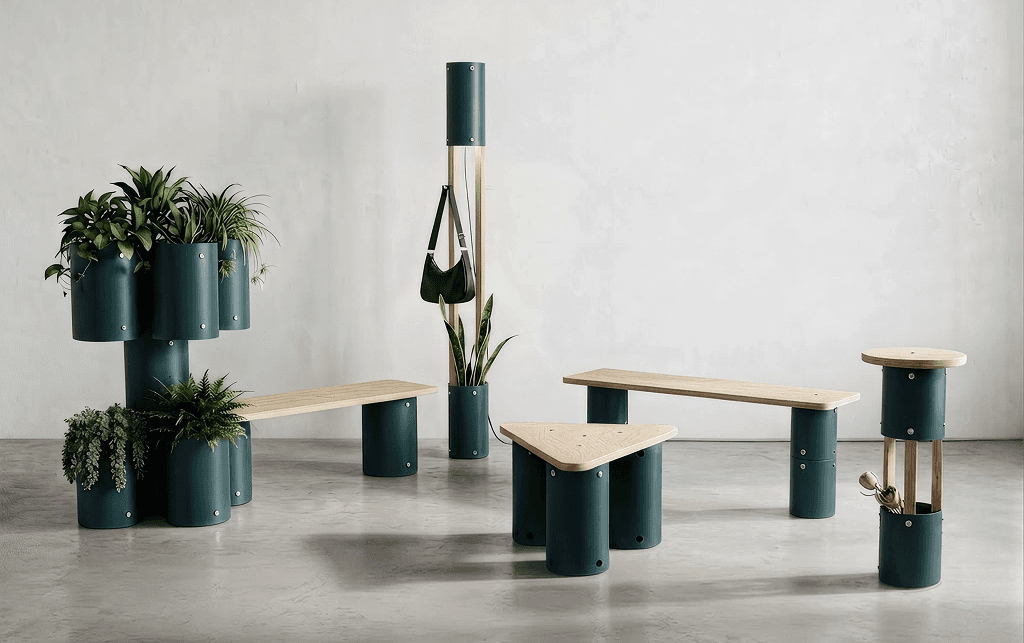



Pipe World
Team: Individual project under a German company "Mifactori: Ikego"
What if products were never really finished, just reassembled for different purpose?

Most products are designed to do one thing, then thrown away when that one thing is no longer needed. Ikego starts from a different question: what if every part had more than one use?
(Context)
The circular economy only works when products are designed for it. Most aren't, built to be replaced rather than reused. Imagine your whole home made of Open Multipurpose Parts, a dynamic building kit you can remix anytime. That's the freedom Ikego is designing toward.
(Research)
My research started with modular systems like LEGO, where a few parts build many things just by changing how they connect. From there I studied the existing Ikego system, to make sure any parts I designed would actually connect with it. My brief was drainage pipes, so that's where I applied it, studying how they're made, joined, and discarded, and reimagining them as parts that could become something else, a shelf bracket today, a stool leg tomorrow.
(Users)
Early adopters will be young families, offices, exhibition spaces, and nomadic individuals, anyone who gets an immediate benefit from parts that convert. The rest follow from there.

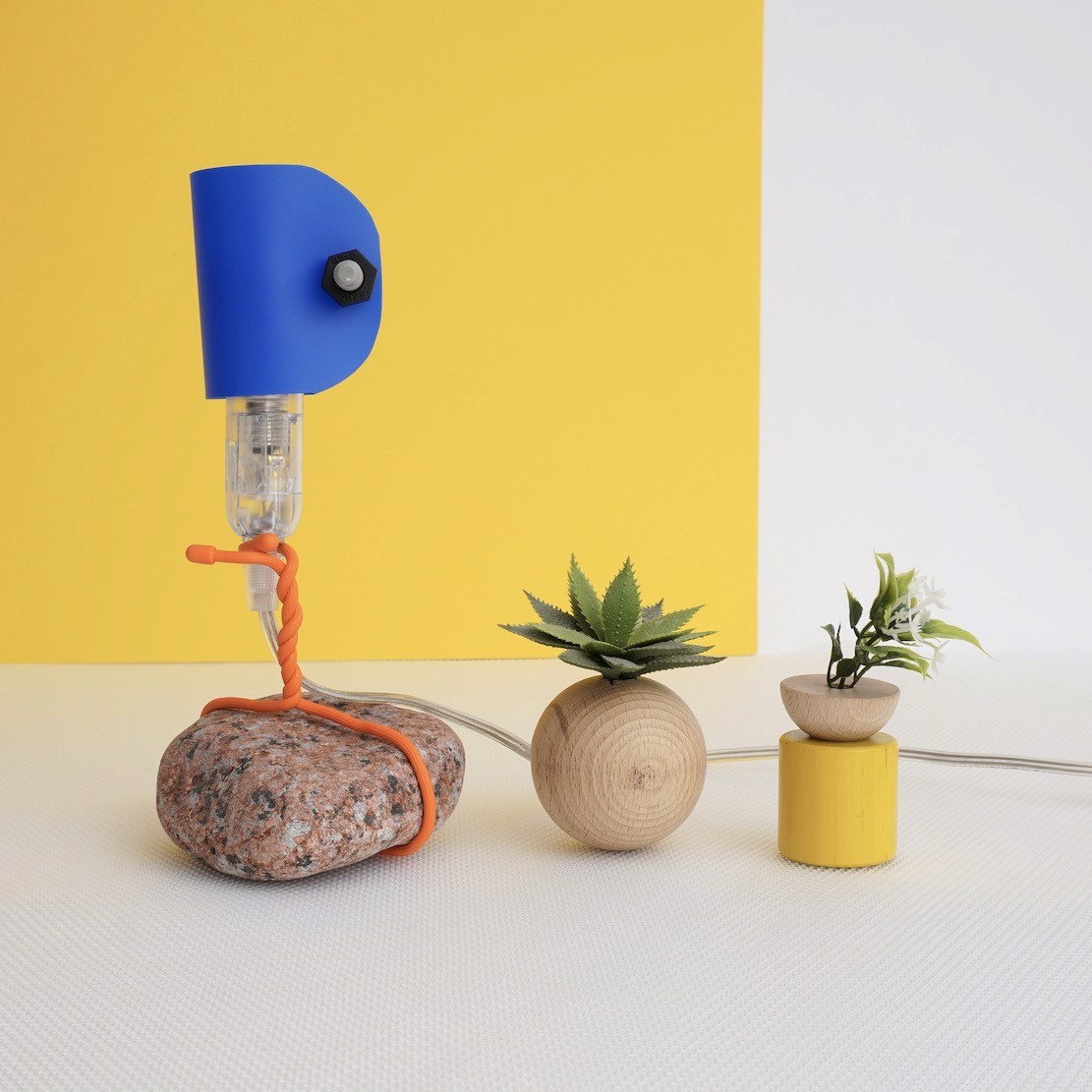


The brief was to find a use case for pipes. So I started with a simple question, where have I seen pipes before? What stood out was this, a pipe's fixed width looks like a limitation, but it's actually the opposite. With the right joinery, that one fixed section can become almost any structure.

That question led me to ask what specific width would work best, which led me to drainage pipes. They're already part of the Ikego system but remain largely unexplored, and I had rarely seen design work engage with this thicker diameter within circular design.
From there, I studied how drainage pipes are already used across different products, and in parallel of exploring the pipe itself, testing what it could become just by changing its orientation. Rotating, stacking, flipping the same piece kept opening up new possibilities.

Keeping the pipe's material and thickness in mind, there are a lot of restrictions exploring it horizontally, but at a fixed height, stacking it open up various use case scenarios. That led me to design connectors for it.

This is only the beginning. There are more sets already, and more on the way. Explore them all in the given link or at ikego.world.
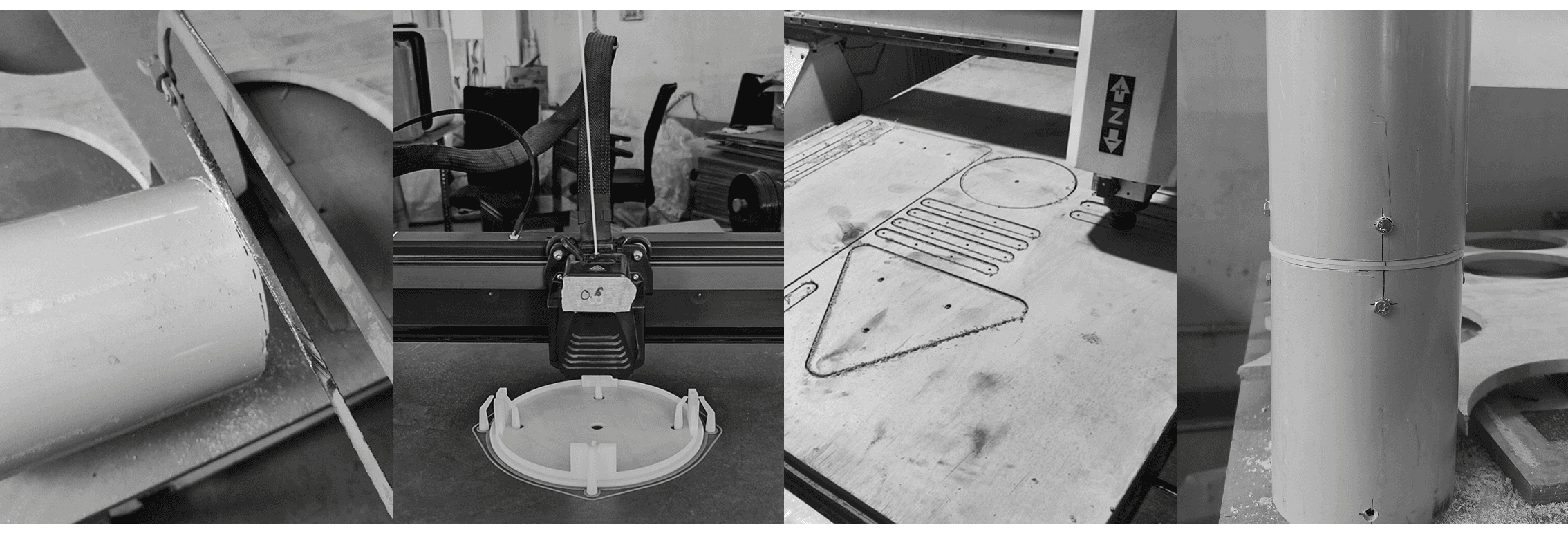
Introducing Pipe World
With the connector finalised, I designed a full system around it, Pipe World. It's built from two pipe sizes, the connectors, and a range of wooden and electrical pieces, some of which already exist in the Ikego system. From these parts, six major sets have emerged so far, with more to come. All of them are in Status of Physical functional prototype.

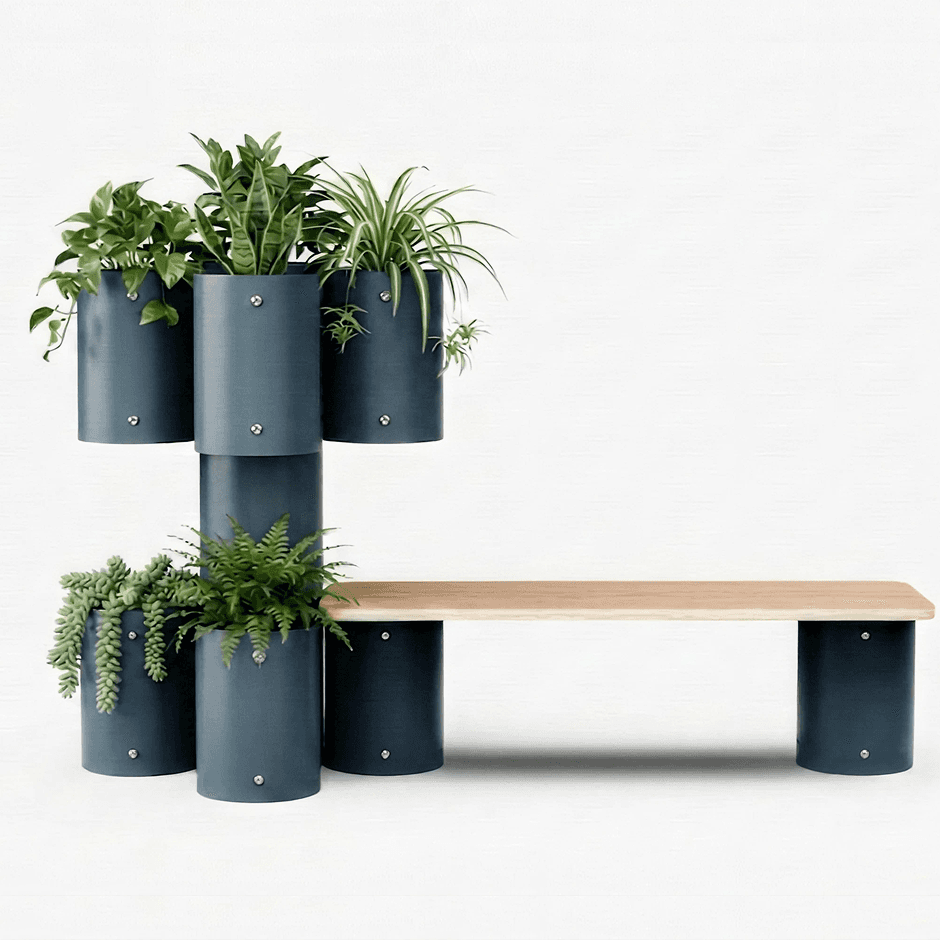
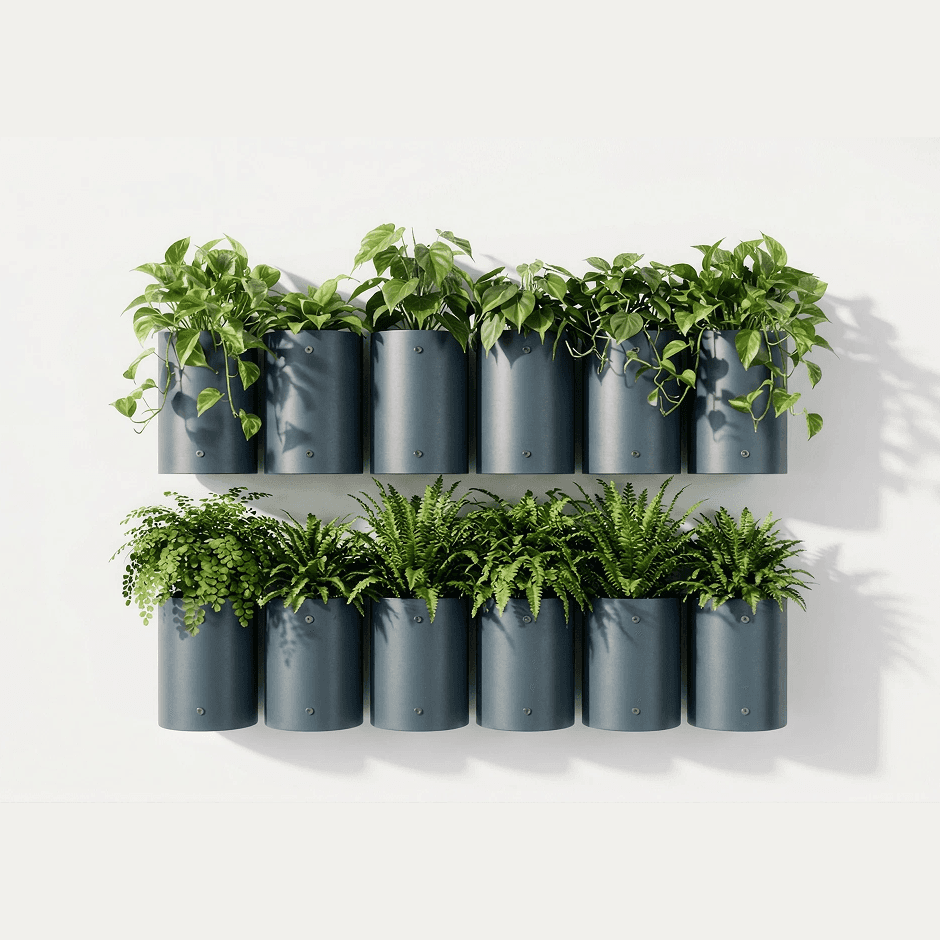
Caterpillar Planting System
Caterpillar Planting System lets you build worlds for plants, because they built the world we live in. It's a modular planting system where all the pipes can be joined together, and with the help of other parts, you can explore a range of combinations to suit your space.



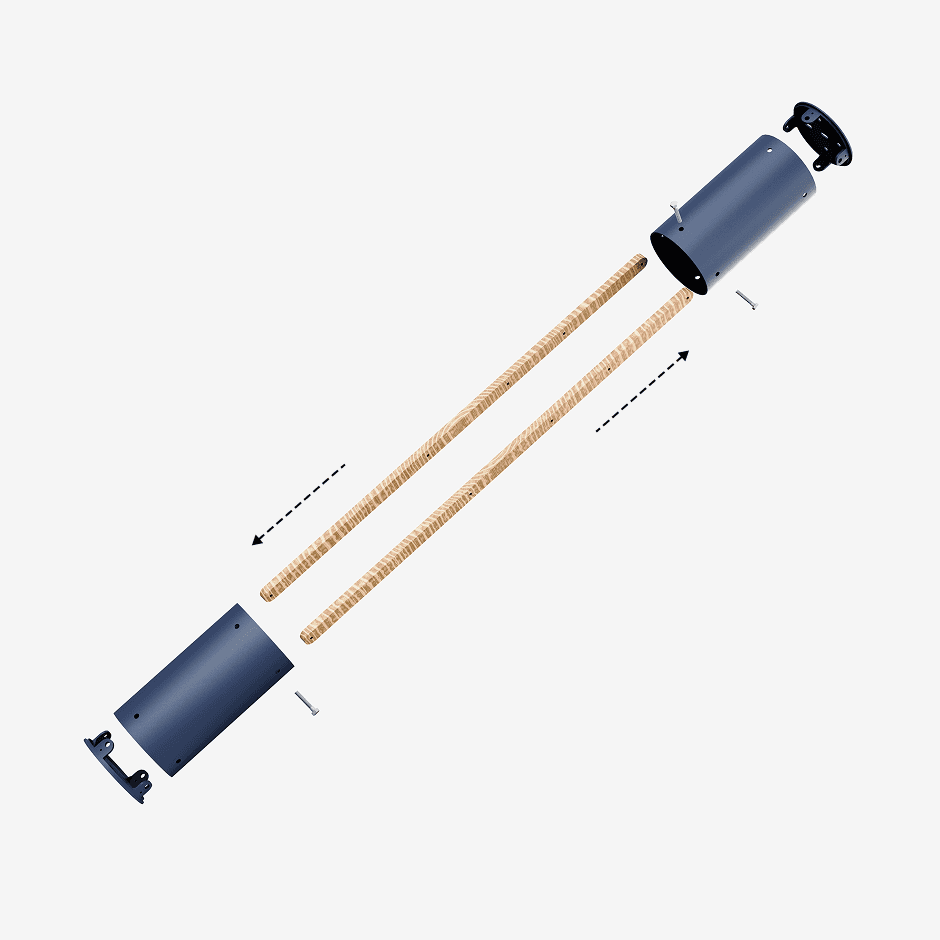
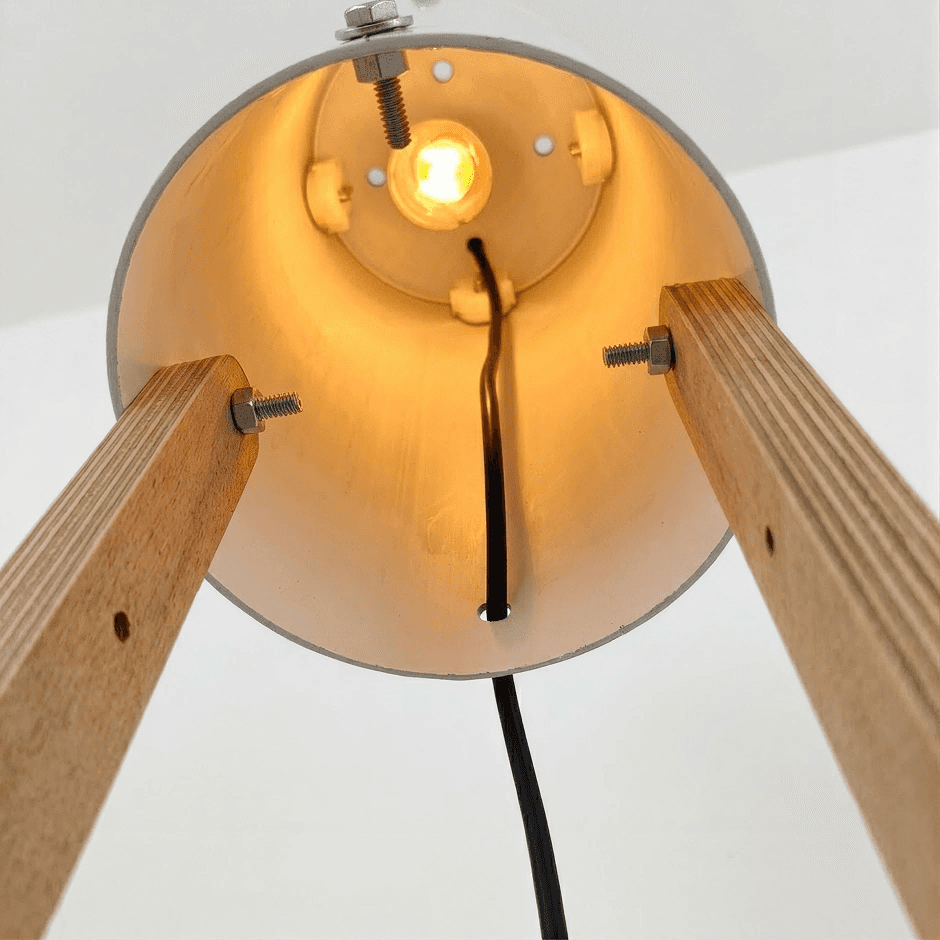
Multi Lamp
Multi Lamp brings subtle light to your room and to the sustainable world it helps you build. It's a modular lamp with adjustable height, and by swapping in different sized rails and pipes, you can explore a range of styles and orientations from the same set of parts.



Tripot
Tripot brings triangles into the physical world, inviting you to build infinite landscapes. It's a modular stool that doubles as a side table, and with its triangular top, you can explore a range of styles from the same set of parts.


B-Rack
B-Rack invites you to stack it, or stack yourself on it. Stack or be stacked. It's a modular bench with adjustable height options, and these simple benches can be stacked together in different orientations to form a rack or even a bed.


This is only the beginning. There are more sets already, and more on the way. Explore them all in the given link or at ikego.world.